
Pool Resurfacing & Replastering in Orlando, FL
We connect Orlando-area homeowners with independent local pool contractors for free, no-obligation quotes. The contractor you choose quotes, contracts and does the work.
Get a Free Quote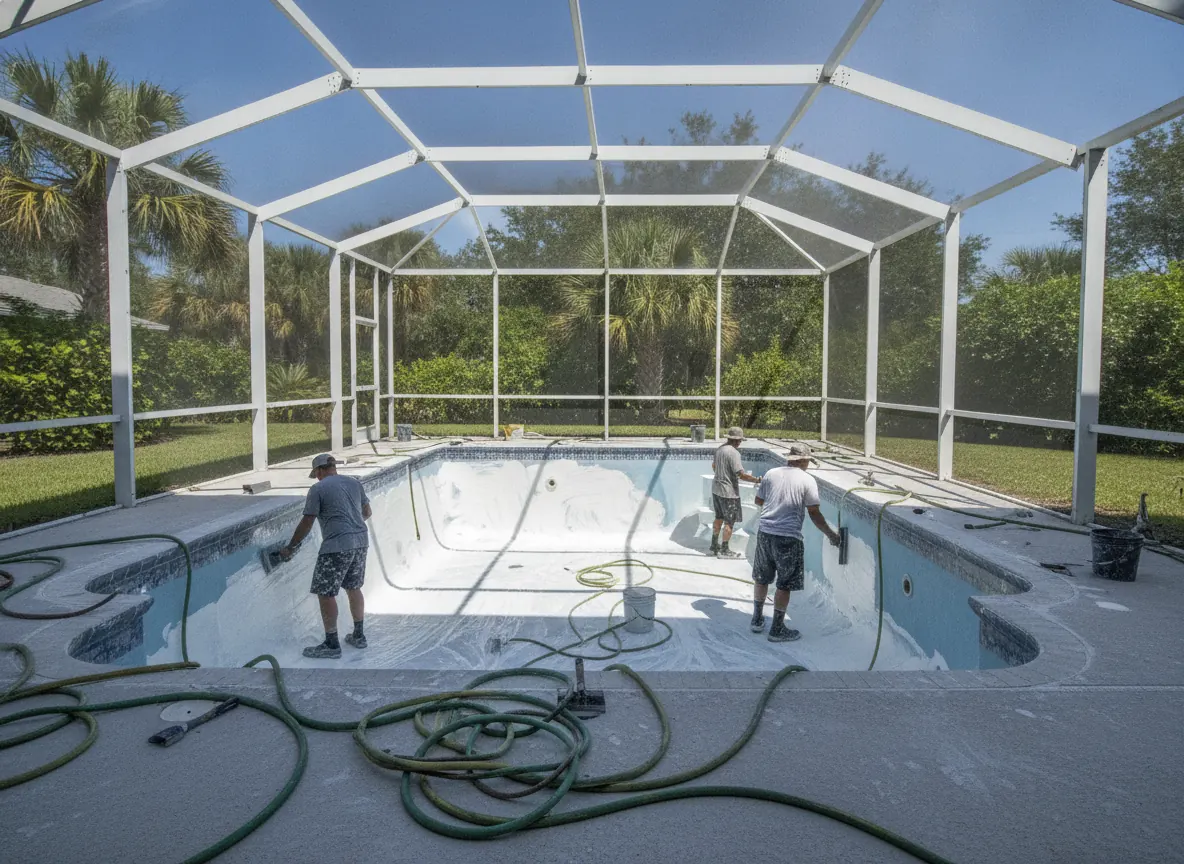
Resurfacing vs replastering: what the words mean
Homeowners use the two words almost interchangeably. Resurfacing is the broad term for a new interior finish on a concrete (gunite) pool: white plaster, colored plaster, quartz or pebble aggregate. Replastering is the narrower case where the new coat is plaster. White plaster is often called marcite, and colored plaster uses the same cement-based approach with pigment added.
Florida's licensing statute uses neither word. It calls the work "interior finishes" or "interior refinishing", and it treats it as licensed pool contracting. Weighing plaster against aggregate? See pebble and quartz finishes.
Signs a pool may need resurfacing
Homeowners asking for quotes usually mention one or more of these:
- Rough or scratchy patches underfoot on steps, benches or the floor
- Stains or blotchy discoloration that brushing and normal chemistry do not lift
- Etched, chalky or pitted plaster, which is easy to see once the pool is clean
- Loose, cracked or missing waterline tile (see tile and coping replacement)
- Visible cracks, which a contractor should check for shell damage
For context, 44.7 percent of Orange County housing units and 60.8 percent of Seminole County units were built from 1970 to 1999 (ACS 2024 5-year); those are homes, not pools. Sometimes an acid wash is enough to brighten stained plaster. Cost guides put it at $300–$700 for most in-ground pools, and it works by etching the surface with acid. Our guide to signs your pool needs resurfacing goes deeper.
How a plaster resurfacing job usually runs
Methods vary by contractor. This is the general sequence.
Inspection and written quote
The contractor checks the shell, finish, tile and main drain cover, measures the surface and lists in writing what is included.
Drain timing and groundwater check
Draining is part of the job, and Florida's servicing license scope names "the substantial or complete draining" of a pool for repair or renovation. Trade sources explain the main concern calmly: when groundwater is high, pressure from outside an empty shell can crack, bulge or float the pool (AQUA Magazine). WaterShapes adds that a hydrostatic relief valve is not a cure-all. Trade practice, not law, is to avoid draining during or right after heavy rain, keep the empty time short and check the relief valve and groundwater first.
Discharge plan
Orange County's rules: stop adding chlorine about 10 days before, reach total chlorine of 0.01 mg/L or less and pH 6.5 to 8.0, and discharge to the lawn at 25 gallons a minute or less, never to storm drains, streets or septic systems. Contaminated water is pumped out by a sanitary service, and St. Johns River Water Management District approval may apply for dewatering.
Surface preparation
Depending on the old finish, the crew chips out loose or failed plaster, or prepares the surface and applies a bond coat where that method is used. Some jobs include an acid wash. Orange County notes that muriatic acid used to etch a concrete interior drops pH quickly, which matters for any rinse water.
Application
The crew applies the white or colored plaster and trowels it smooth.
Refill and start-up
The pool is refilled and the contractor's start-up routine begins. Orlando Utilities Commission reports average hardness of about 129 ppm, roughly 7 grains per gallon, so ask how the start-up accounts for your fill water. Get the start-up instructions in writing.
The quote-to-finish process page covers the same steps from the homeowner's side, and our Central Florida draining guide covers the discharge rules in more detail.
Typical resurfacing price ranges
Size, access, the old finish and the quote's scope all move the number.
| Item | Typical range |
|---|---|
| Pool resurfacing, typical project | $6,000–$15,000 (about 1,000 sq ft of surface) |
| White plaster / marcite | $6–$8 per sq ft (about $6,000–$8,000 per 1,000 sq ft) |
| Acid wash | $300–$700 for most in-ground pools |
| Draining | about $175–$225 |
| Refill water (City of Orlando, OUC) | A 20,000-gallon refill adds roughly $47–$84 in OUC water volume charges depending on the rest of that month's use, before sewer charges (OUC rate schedule effective Oct 1, 2026) |
Typical national ranges from HomeGuide (2026), HomeAdvisor (2026), Angi (2026) and Fixr — estimates, not quotes.
See the pool resurfacing cost guide for every finish and a calculator.
Florida license and permit rules for resurfacing
In Florida, pool resurfacing is licensed pool contracting. All three state pool/spa license classes (commercial, residential, and swimming pool/spa servicing) list "interior finishes" or "interior refinishing" in their scope (Fla. Stat. §489.105(3)(j)–(l)), and the servicing class also covers draining a pool for repair or renovation. A servicing contractor may not modify the concrete shell (CILB declaratory statement DS 2009-064), so structural changes need a residential or commercial pool contractor. Plaster, tile and deck crews may hold voluntary pool specialty licenses (Rule 61G4-15.032), but they must work under contract to a licensed pool contractor.
Ask for the contractor's state license number (it must appear in their ads and contracts, §489.119(5)(b)) and check it on MyFloridaLicense.com. A county business tax receipt is not a license.
Contracts by unlicensed contractors are unenforceable by them (§489.128), and the Florida Homeowners' Construction Recovery Fund (up to $30,000 for pool/Division II contracts signed on or after July 1, 2024) applies only to licensed contractors.
Permits
Permit rules for resurfacing vary by city and county, and no Orange, Seminole or Lake county source we found states the residential rule in writing. Orange County has treated pool resurfacing as a pool renovation, and it requires a permit for new concrete or paver decks (pavers need a zoning permit). The licensed contractor confirms and pulls any permit required.
If the job is permitted, the inspector may check pool safety features. Ask your contractor.
Main drain covers
With the pool empty, a resurface is a natural time to ask about replacing an old main drain cover with one that meets the federal Virginia Graeme Baker Act standard.
Pool resurfacing questions
What is the difference between resurfacing and replastering a pool?
Resurfacing is the broad term for putting any new interior finish on a concrete pool, whether white plaster, colored plaster, quartz or pebble aggregate. Replastering is the narrower case where the new finish is plaster, often called marcite. Florida's pool license statute uses neither word. It calls the work "interior finishes" or "interior refinishing", and it is licensed pool contracting either way.
Does pool resurfacing need a permit in Orlando?
Permit rules for resurfacing vary by city and county, and no Orange, Seminole or Lake county source we found states the residential rule in writing. Orange County has treated pool resurfacing as a pool renovation, and it requires a permit for new concrete or paver decks (pavers need a zoning permit). The licensed contractor confirms and pulls any permit required.
Who can legally resurface a pool in Florida?
A contractor holding any of the three state pool/spa license classes: commercial, residential, or swimming pool/spa servicing. Each lists interior finishes or interior refinishing in its scope (Fla. Stat. §489.105(3)(j)–(l)). Ask for the contractor's state license number and check it on MyFloridaLicense.com. A county business tax receipt is not a license, and the handyman exemption does not apply to resurfacing.
When should I schedule a pool resurface in Orlando?
NOAA's 1991–2020 normals for Orlando International Airport put 29.57 inches of the year's 51.45 inches in June through September, about 57 percent. November is the driest month at 1.79 inches. Many homeowners plan the job for drier months and avoid draining during or right after heavy rain. Your contractor makes the final scheduling call.
Does resurfacing a pool fix a leak?
Not by itself. A new finish is not a leak repair, so the usual order is to find the leak first. Florida's construction licensing board found no facts showing a license is needed for electronic leak detection (CILB DS 2014-050), but the repair itself is licensed work. Ask the contractor whether leak testing belongs before the resurface on your job.
Request free resurfacing quotes or call Call (727) 300-6656.
Rough plaster, stains or loose tile? Get a clear resurfacing quote.
Free, no-pressure quotes across Orlando, Winter Park, Windermere, Oviedo, Lake Mary and Central Florida.