
Pool Remodeling, Crack & Leak Repair in Orlando, FL
We connect Orlando-area homeowners with independent local pool contractors for free, no-obligation quotes. The contractor you choose quotes, contracts and does the work. This page covers pool remodel scope, structural cracks, leak detection and repair, and the safety items to ask about.
Get a Free Quote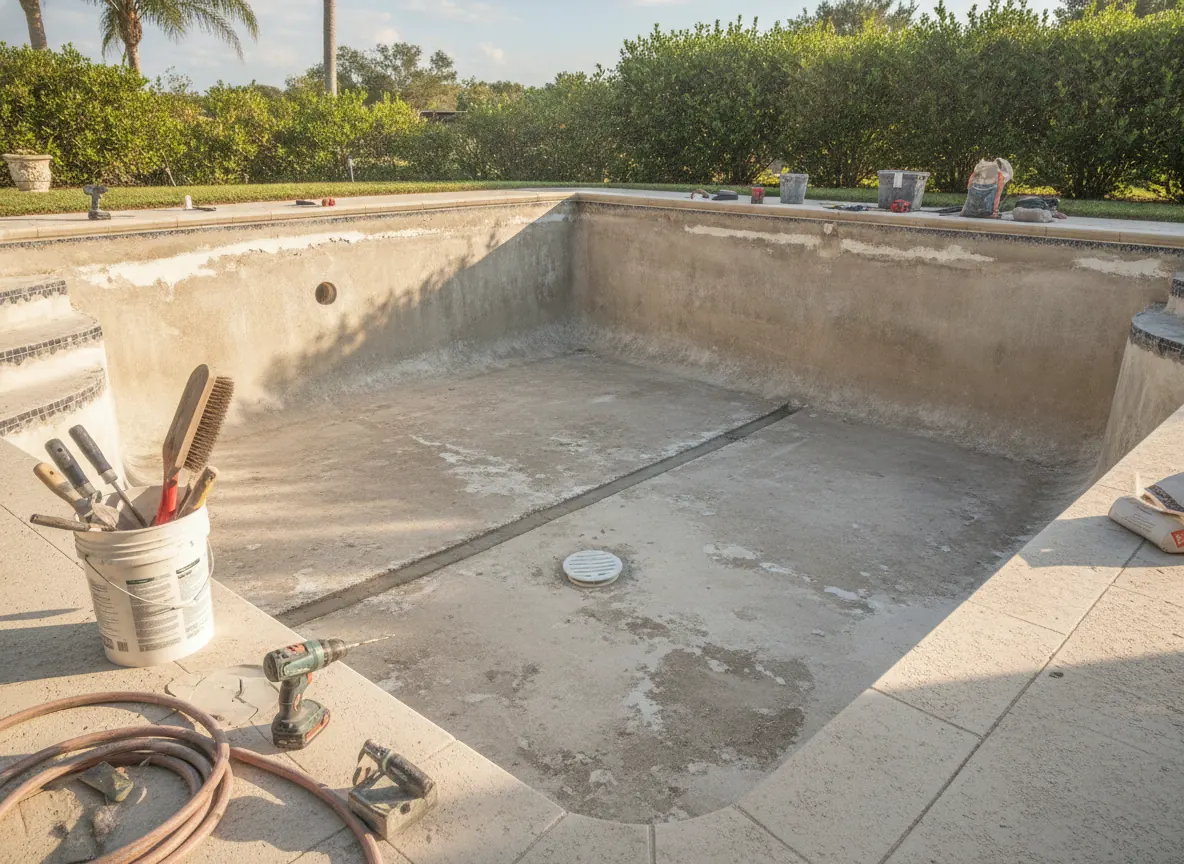
What a pool remodel can include
A remodel goes beyond a new finish. Homeowners asking for remodel quotes usually want some combination of these:
- Leak detection and leak repair
- Structural crack repair in the shell
- Re-plumbing and equipment replacement
- New lights
- Step or bench changes, or other changes to the pool's shape
- Safety features such as a barrier or alarm
- A new interior finish, tile or coping to finish the job (see resurfacing and replastering and tile and coping)
The scope decides which license the contractor needs, so it is worth sorting out first.
Structural cracks and the servicing-class limit
Florida has three pool/spa license classes: commercial, residential and swimming pool/spa servicing. All three may do interior refinishing. The difference shows up when the concrete itself changes. In declaratory statement DS 2009-064, the Construction Industry Licensing Board said "a swimming pool/spa servicing contractor can not make any modifications of a swimming pool concrete structure". Reshaping, adding benches or steps and structural crack or shell work therefore belong to a residential or commercial pool contractor.
When you collect remodel quotes, check that each contractor's license class matches the work. A crack in the finish is not always a crack in the shell, and an inspection is what tells them apart.
In Florida, pool resurfacing is licensed pool contracting. All three state pool/spa license classes (commercial, residential, and swimming pool/spa servicing) list "interior finishes" or "interior refinishing" in their scope (Fla. Stat. §489.105(3)(j)–(l)), and the servicing class also covers draining a pool for repair or renovation. A servicing contractor may not modify the concrete shell (CILB declaratory statement DS 2009-064), so structural changes need a residential or commercial pool contractor. Plaster, tile and deck crews may hold voluntary pool specialty licenses (Rule 61G4-15.032), but they must work under contract to a licensed pool contractor.
Ask for the contractor's state license number (it must appear in their ads and contracts, §489.119(5)(b)) and check it on MyFloridaLicense.com. A county business tax receipt is not a license.
Contracts by unlicensed contractors are unenforceable by them (§489.128), and the Florida Homeowners' Construction Recovery Fund (up to $30,000 for pool/Division II contracts signed on or after July 1, 2024) applies only to licensed contractors. The handyman exemption does not apply to this kind of work, which exceeds $2,500.
Leak detection vs leak repair
Finding a leak and fixing it are treated differently. In DS 2014-050, the licensing board considered whether electronic leak detection falls under the pool contractor scopes and "did not find facts supporting the need for a license". So leak detection may not need a license. The repair is a different matter: repairing a pool's structure or piping is licensed work.
A new finish does not fix a leak on its own. If you suspect a leak, ask contractors whether detection should come before any resurfacing quote, so the remodel addresses the cause.
Drain covers and safety features
Main drain covers. A remodel or resurface is a natural time to ask about replacing an old main drain cover with one that meets the federal Virginia Graeme Baker Act standard.
Barriers. Florida's pool safety law (chapter 515) applies to new residential pools at final inspection. Whether a resurface or remodel triggers safety-feature upgrades locally is unconfirmed. If the job is permitted, the inspector may check pool safety features. Ask your contractor.
Permits
Permit rules for resurfacing vary by city and county, and no Orange, Seminole or Lake county source we found states the residential rule in writing. Orange County has treated pool resurfacing as a pool renovation, and it requires a permit for new concrete or paver decks (pavers need a zoning permit). The licensed contractor confirms and pulls any permit required.
Orange County's pool-pollution page adds that modification of an existing pool will require a building permit from its Division of Building Safety, and that discharges to the county storm system need a right-of-way utilization permit.
After a storm, and before you sell
Hurricane Ian brought 13.11 inches to the Orlando-area threaded record on September 28–29, 2022 (ACIS), and during Hurricane Milton in 2024 the Orlando West COOP gauge recorded 14.83 inches while Orlando International gusted to 76 mph (NWS Melbourne). Heavy rain like that is a reason not to leave a pool empty during storm season. After a declared state of emergency, Florida law treats unlicensed contracting as a third-degree felony (§489.127(2)(c)), so check the license number before hiring storm-related repair work.
If you plan to sell, Johnson v. Davis (Fla. 1985) sets a seller's duty to disclose known, material defects that are not readily observable, such as a known shell leak or cracks. This is general information, not legal advice. Our post on remodeling a pool before selling covers disclosure, HOA approval and permits.
Remodel cost context
Remodels vary too widely for one range. A full tile interior alone runs about $20,000–$30,000, and a typical resurfacing project $6,000–$15,000 (typical national ranges from HomeGuide (2026), HomeAdvisor (2026), Angi (2026) and Fixr — estimates, not quotes). See the cost guide for more line items.
Remodeling and repair questions
Does resurfacing a pool fix leaks?
Not by itself. A new interior finish is not a leak repair, so the usual order is to find the leak first and then decide what the repair and finish should be. Florida's construction licensing board found no facts showing a license is needed for electronic leak detection (CILB DS 2014-050), but repairing the leak is licensed work. Ask contractors to explain the order they recommend.
Can a pool servicing contractor repair a structural crack?
Not if the repair modifies the concrete shell. In declaratory statement DS 2009-064, Florida's Construction Industry Licensing Board said a swimming pool/spa servicing contractor cannot make any modifications of a swimming pool concrete structure. Structural crack and shell work, reshaping and adding steps or benches need a residential or commercial pool contractor. Check the license class on MyFloridaLicense.com.
Is a new main drain cover required when a pool is remodeled?
We do not say it is legally required for a residential pool. A remodel or resurface, when the pool is empty, is a natural time to ask about replacing an old main drain cover with one that meets the federal Virginia Graeme Baker Act standard. Ask your contractor what cover is on your pool now and what they recommend.
Does a pool remodel trigger new safety barrier rules?
Florida's pool safety law, chapter 515, applies to new residential pools at final inspection. Whether a remodel or resurface triggers safety-feature upgrades locally is unconfirmed. If the job is permitted, the inspector may check pool safety features. Ask your contractor, and ask the building department if your remodel changes the pool itself.
Should I disclose pool cracks or a leak when selling my home?
Under Johnson v. Davis (Fla. 1985), a Florida home seller has a duty to disclose known facts that materially affect value and are not readily observable to the buyer. A known shell leak or cracks can fall in that category. This is general information, not legal advice, so talk with your real estate attorney or agent about your situation.
Request free pool remodel and repair quotes or call Call (727) 300-6656.
Rough plaster, stains or loose tile? Get a clear resurfacing quote.
Free, no-pressure quotes across Orlando, Winter Park, Windermere, Oviedo, Lake Mary and Central Florida.